
Storm Logic: Harnessing Mass Psychology, the Hidden Code of Financial Power
This page covers three core ideas:
- What Mass Psychology Means
- Why It Moves Markets
- The Emotional Vectors: Fear, Greed, Euphoria, Panic
Nov 6, 2025
Stand at the edge of a market storm and watch the spectacle. Prices convulse. Screens bleed red and green. Fear and greed rise like opposing tides, swallowing logic, spitting out ruin. Most investors respond as they always have: they flinch, chase, panic, and drown. But a few stand immovable, not because they are immune to emotion, but because they understand its pattern. They see the storm as code. Where the crowd sees chaos, they see coordinates.
Spreadsheets do not govern markets. The primal circuitry of human instinct governs them. Panic-driven decision making, euphoria, herd mentality, and the ancient instinct for safety shape prices far more than discounted cash flows ever will. Every bubble, crash, and mania is a rerun with new costumes. The names change. The tickers change. Human nature does not.
Those who master this truth become architects rather than participants. They don’t predict the future; they decode the present. They read mass psychology the way a field commander reads the terrain before a battle. This is not mystical contrarianism. It’s structural realism.
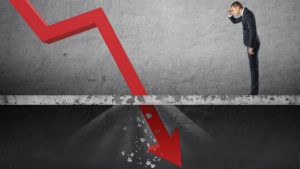
The crowd’s emotions are not random. They follow vectors. First comes excitement—the spark that ignites momentum. Then euphoria, where disbelief turns to reckless belief. Then hesitation, as cracks appear. Then panic, when the herd realises it has been running toward a cliff—finally, despair, where opportunity quietly returns. Markets are nothing more than these vectors cycling through different costumes.
Emotion Is the Market’s Operating System
Those who ride these cycles successfully do not do so with slogans about “buying the dip.” They apply discipline that borders on cold violence. Suvorov’s campaigns were built on a simple premise: understand the field better than your opponent, move faster, strike where they are blind. Market mastery follows the same logic. The herd is slow, loud, and predictable. The few who observe first and act at the turning point don’t merely survive—they plunder the emotional chaos.
The illusion that markets are primarily rational is convenient for textbooks and dangerous for real money. Prices are built on perception, not truth. Perception is built on collective emotion. When those emotions shift, reality begins to bend. If you can map emotional inflexion points, you can do what the herd cannot: anticipate rather than react.
There is no magic. There is only perception, discipline, and timing. The difference between drowning and harnessing the storm lies in whether you see emotion as noise or a signal.
Chaos Is Predictable When You Know the Field
Consider how every crisis begins. The first tremors are ignored. The majority believes the story they’ve already told themselves. The denial phase is thick with comforting narratives: “It’s just a correction,” “The fundamentals are strong,” “This is temporary.” But markets are not moved by fundamentals at turning points—they’re moved by fear breaking through collective denial.
The few who understand mass psychology don’t wait for the headlines to tell them what’s happening. They read the emotional pitch before the data confirms it. In the early stages of panic, while others debate valuation models, they position themselves quietly. When hysteria takes hold, they are already inside the structure.
Likewise, bubbles don’t collapse when valuation metrics scream absurdity; they collapse when euphoria peaks. Crowd behaviour always leaves fingerprints. Social media chatter, analyst revisions, trading volume, option activity—these are not merely statistics; they are the modern drumbeats of crowd emotion. Ignore them, and you walk blind into the stampede.
To harness mass psychology is to become fluent in herd tempo. You learn to step aside when the mob charges, enter when silence falls, and exit while cheers still echo. Twain’s razor remains undefeated: when you find yourself on the side of the majority, pause. The majority is almost always wrong at the point of maximum conviction.
The crowd moves like a tide. It surges with conviction, crashes with despair, and drags with inertia. The disciplined few surf that tide rather than fighting it or drowning beneath it. They don’t impose their will on the market. They align with its underlying emotional current, then move one step ahead.
This is the hidden code of financial power: not superior intellect, but emotional distance, pattern recognition, and strategic timing. The herd reacts. The master anticipates. One drowns. The other commands the storm.
Decoding the Herd: Lessons from Market Rebels
The crowd doesn’t think. It reacts. It moves like water poured into a container—shapeless, impulsive, and bound by its vessel. In markets, that vessel is narrative. The herd flows into stories the way blood rushes into wounds: instinctively, without question. They do not build these narratives. They inherit them, amplify them, and die by them.
The rebel does not shout against the current. He listens to it. Gustave Le Bon saw crowds for what they are: thinking machines stripped of individuality. Rational men dissolve into collective impulse. Anonymous in the mob, they surrender judgment, drawn toward certainty like moths toward light. This is why markets in frenzy feel holy. The herd is not evaluating; it is worshipping.
Every bubble begins as a whisper—an idea too small for institutions to touch, too fresh for the cynical to grasp. The herd arrives late, always late, seduced by rising prices, glowing headlines, and dinner table confessions of overnight riches. They chase momentum not because they believe, but because they cannot bear to be left behind. Euphoria is not belief; it is fear wearing a smile.
Narrative Is the Cage, Instinct Is the Jailor
The contrarian sees this for what it is: mass hypnosis. Not rebellion for rebellion’s sake, but the refusal to surrender perception. Suvorov understood the same principle on the battlefield: when the enemy gathers in mass, it is not strength, but target density. A concentrated herd is not invincible—it is predictable.
Market rebels move like ghosts between emotional phases. When the herd surges forward, they step aside. When it stalls, they advance. When panic erupts, they strike. Their edge is not in forecasting events but in reading the emotional terrain as it shifts under everyone else’s feet.
The crowd’s weakness is baked into its structure:
- It must wait for confirmation before it believes.
- It must act collectively, because individuality is punished.
- It must panic together, because no one wants to be the first to lose alone.
This is why contrarians rarely appear heroic in real-time. When they enter, the world mocks them. When they exit, the world envies them. Between those moments, they walk alone through fire and noise, armed only with clarity.
The Herd Always Arrives Late
Think of 1999. The Internet boom reached a fever pitch. Taxi drivers were trading tech IPOs, analysts were inventing valuations out of fog, and ordinary people believed destiny itself had changed. A few saw the cracks. They sold when everyone else laughed. When the laughter stopped, they were already gone.
Think of 2008. Fear coated every screen. Liquidity dried. Institutions begged for mercy. The crowd ran not toward safety, but toward collective despair. Rebels stepped in while the herd hyperventilated, buying assets that would later quadruple while others were still frozen in panic.
Fear blinds. Euphoria deafens. Together, they form the perfect prison. The herd oscillates between these poles, never resting at clarity. The rebel stands outside the cage.
There is a moment at every market turning point where perception fractures. The herd cannot process contradiction. They cling to certainty while reality bends. This is where the rebel acts, not on price, not on forecasts, but on psychological dissonance. That split second when the crowd whispers, “This can’t be happening,” is when the decisive strike lands.
The market rewards those who can hear the crack before the fall, see the frenzy before the fire, and move when others are paralysed. It is not luck. It is pattern recognition refined through discipline and blood.
Twain’s razor slices clean: when you find yourself with the majority, stop. Reflect. Because the majority is almost always facing the wrong direction at the wrong time, eyes closed, mouths open, waiting to be led.
To decode the herd is to strip away illusion and stare into the raw mechanics of human instinct. It is not romantic. It is ruthless. It is the difference between being swallowed by the stampede or walking the field alone after the chaos, counting the spoils.
This is the way of the market rebel: silence when others scream, clarity when others hallucinate, precision when others flail. The herd can only repeat. The rebel can rewrite.
These are all forms of what the psychos themselves would call if they faced their condition frankly, rhetorical over compensation. James Thurber 1894-1961
Masters of the Crowd: Anatomy of the Stampede
The crowd believes it thinks. It doesn’t. It reacts. Market hysteria doesn’t arise from logic—it erupts from anonymity, where individuals surrender their edges and become conduits of collective impulse.
Anonymity Kills Judgment
Once submerged in the mass, personal accountability dissolves. Rational calculation turns to raw reflex. The same person who hesitates to cross a street alone will follow a roaring herd off a cliff if the crowd surges first. This is the engine of every mania: the suspension of judgment under the pressure of belonging.
The stampede begins quietly. A spark. A story. A stock doubling. A new technology whispered about in coffee shops and message boards. Then comes imitation—the soft hum that becomes a roar. One by one, individuals lower their shields, merge into the mass, and allow collective emotion to take the helm.
This is why markets in euphoria feel almost religious. They’re not fueled by analysis but by shared exaltation. People don’t buy because they understand; they buy because others are buying. Belief is outsourced to the crowd.
Collective Euphoria Is Not Strength, It’s Target Density
The most dangerous misconception in markets is to mistake mass enthusiasm for validation. A rising chorus does not signal truth; it signals alignment. And alignment is exploitable. Suvorov understood this centuries ago. When forces gathered tightly, they didn’t become unstoppable—they became predictable. Their concentration revealed both where and when to strike.
Market stampedes follow the same pattern. When euphoria peaks, information homogeneity reaches its highest point. Everyone believes the same story. Analysts copy each other’s forecasts. Financial media pumps identical headlines. Social feeds echo a single hymn. There is no dissent left. That’s the moment when fragility is greatest: one unexpected tremor and the herd pivots from exaltation to stampede in the opposite direction.
Understanding this rhythm is how the few rise while the many drown. Herds have momentum, but they also have blind spots. A skilled observer can map them with terrifying precision.
The Stampede Has a Rhythm
Every mania has its own music. The tempo begins with curiosity, accelerates with imitation, peaks with frenzy, and collapses with panic. This is collective effervescence—the mass hysteria Durkheim described, where shared emotion overrides reason entirely. Markets thrive on this energy. It powers bubbles, inflates valuations, and blinds entire populations.
The anatomy is consistent:
- Early phase: Insiders accumulate quietly while the herd sleeps.
- Middle phase: Early adopters trumpet their success; the crowd begins to follow.
- Late phase: Euphoria becomes doctrine. Price is truth. Dissent is heresy.
- Collapse: A single tremor triggers mass flight. Panic spreads faster than euphoria ever did.
The crowd is not malicious—it is mechanical. It responds to emotional stimuli like a body reacting to pain. Those who understand its rhythm can time their movements with surgical precision. Those who don’t are trampled when the music shifts.
This is why rebels never stare at numbers alone. They stare at people—at narratives, tone, chatter, headlines, trading volume, positioning data, and social tempo. They don’t predict fundamentals; they map emotional terrain.
And when the rhythm changes, they’re not surprised. They’re already in motion.
The anatomy of the stampede isn’t a mystery. It’s a pattern. It’s repetition. It’s human nature, replayed in new costumes. History’s bubbles—from tulips to tech—differ in surface, never in structure.
Conclusion
To master the crowd is not to control it. It’s to stand above it, reading its movement like a commander reads the battlefield, and strike where panic and euphoria reveal their vulnerabilities.
The herd doesn’t think. It pulses.
The rebel doesn’t argue. He listens, calculates, and moves first.
The crowd will always stampede. That cannot be changed. What can change is your position on the field. You can run with them, blind and breathless, or you can climb the ridge, read the rhythm, and act with precision while they drown in noise. The market doesn’t reward the loud. It rewards those who see first, move clean, and never forget that mass emotion is both the signal and the trap.
A Diverse Range of Articles to Explore

Masters of the Crowd: The Stampede Logic of Mass Psychology
Unraveling Stock Market Cycles: Strategies for Long Term

Seeking Alpha Dividend Harvesting: Pioneering the Future of Intelligent Investing

AMD analysis and RSI Stock Indicator

Invest when there is blood in the streets

Value Investing Dead? – the Truth Behind a Timeless Strategy

Money Velocity Equation: Analyzing Economic Growth Predictors and the Impact of AI Disruption

“What is Permabear?”- the World of Perpetual Pessimism

Insights on AI: Unforeseen Changes Amidst Growing Enthusiasm

Child Hunger & the Worsening Global Hunger Crisis

Investing 101: A Guide to Short-Term Stock Market Investing
Stock market and Geopolitical news

Navigating the Markets like a Pro: Unlocking the Secrets of Stock Portfolio Management and Advancing as a Trader

Top US Scientist Resigns – States Global Warming A Big Hoax